By Dr. Gary Goodman
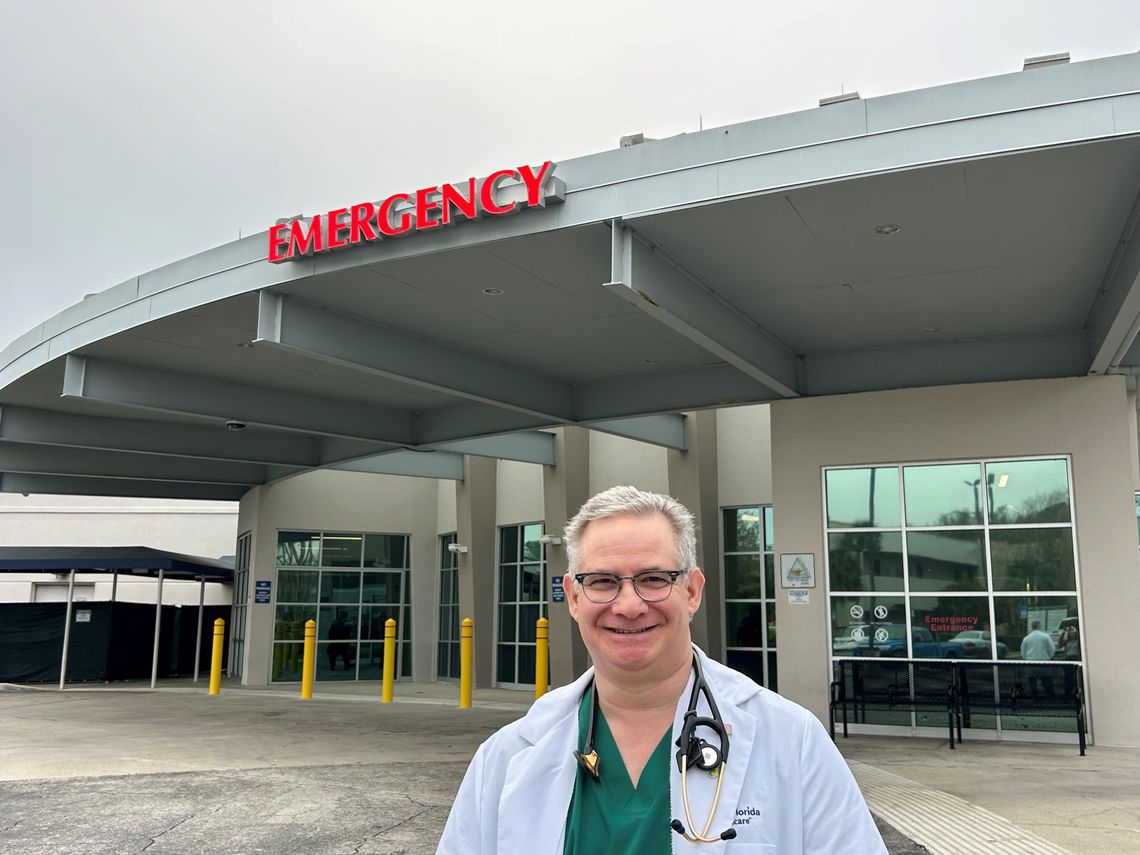
HCA Hospital Lake Monroe
Emergency Room Physician
Imagine you are in a local restaurant, store or maybe a friend’s home when suddenly, you hear a frightened voice: “Help, call 911!” You look over and someone collapsed and is not breathing. There is that brief period of uncertainty and then a bystander takes control, starts cardiopulmonary resuscitation (more commonly known as CPR) while someone calls 911, and perhaps another person brings an Automatic External Defibrillator (AED) to try to restart the victim’s heart.
It happens all too often. And, yes, it’s very frightening. In the scenario above, the bystanders knew what to do. Would you?
During cardiac arrest, a person’s heartbeat and breathing stop. CPR is an emergency lifesaving procedure consisting of “fast and hard” chest compressions that are performed when signs of life are no longer present. Until a patient can be transported to the closest emergency room by ambulance, CPR helps maintain oxygen flow to the brain and heart, improving survivability and minimizing permanent damage.
The most common reason a person’s heart could stop is related to an irregular heartbeat called ventricular fibrillation. Use of an AED can recognize this deadly rhythm abnormality and automatically (and immediately) deliver a lifesaving shock of electricity that can enable the heart to reset to its native rhythm.
February is American Heart Month, so there is no better time to learn about the importance of CPR and use of AEDs. A short training session can make a lifesaving difference for you, your loved ones, or that stranger you never met.
Our team recently partnered with Seminole County Fire Department in recognizing a local community member with a Citizen Life Saving Award. One of our patients experienced a cardiac arrest at home, and his son-in-law
performed CPR until Emergency Medical Services (EMS) arrived. The patient made a full recovery, which is in no doubt tied to the prompt CPR performed. This is just one of many examples of CPR saving lives.
Every minute counts when a person is in cardiac arrest - immediate “fast and hard CPR” and/or the delivery of electric shock from an AED can dramatically improve the chance of survival. According to the American Heart Association, 436,000 people die from sudden cardiac arrest in the United States each year, and a patient’s chance of survival increases 40% or more, often tripling the chance of survival, when a bystander performs CPR or the use of AED is performed correctly and promptly.
As an emergency physician at HCA Florida Lake Monroe Hospital, Seminole County’s only comprehensive cardiac hospital, I can attest to the many lives CPR and AED use have saved. Being prepared and confident in cardiac emergencies is one of the best ways to keep your loved ones – and sometimes even strangers – safe. You don’t have to be a medical professional to save a life. Knowing the signs, calling 911 immediately, and jumping into action can make all the difference.
There are a couple of ways you can help:
Take a CPR and use of an AED course. Hands-only CPR and learning how to use an AED is recommended for the general public, and the course only lasts about an hour. Sign up with Seminole County Fire Department or Sanford Fire Department. Anybody can learn CPR – including children – so bring your loved
ones to a class with you! Learning this skill hands-on with medical professionals to assist is the best way to be prepared. You can sign up by emailing [email protected] or visiting the City of Sanford’s website.
Learn more about CPR, AED use, and why it is important. Visit cpr.heart.org for more information.
This American Heart Month, sign up for a Hands-only CPR and learn how to use an Automatic External Defibrillator. You never know when you might be someone’s hero.