By Taylor M. Coffman
Herald Correspondent
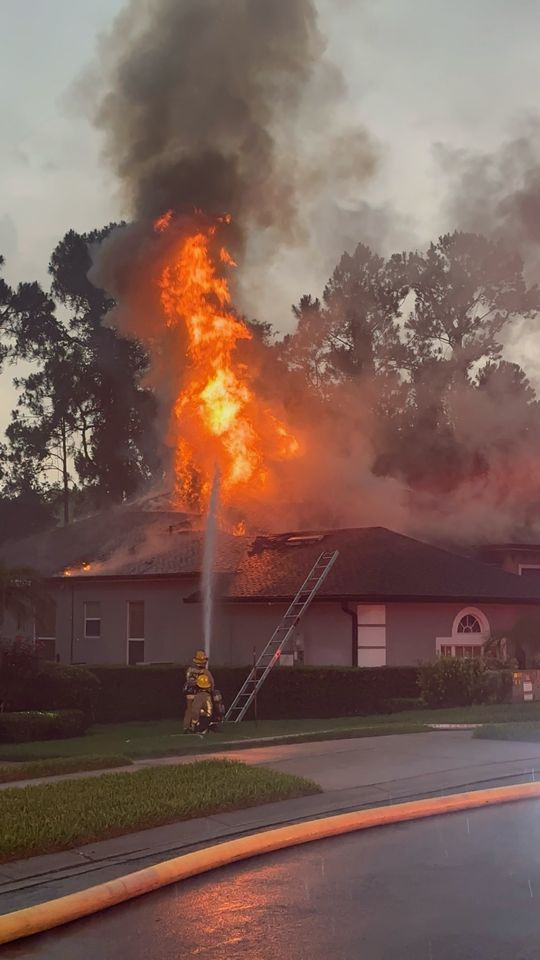
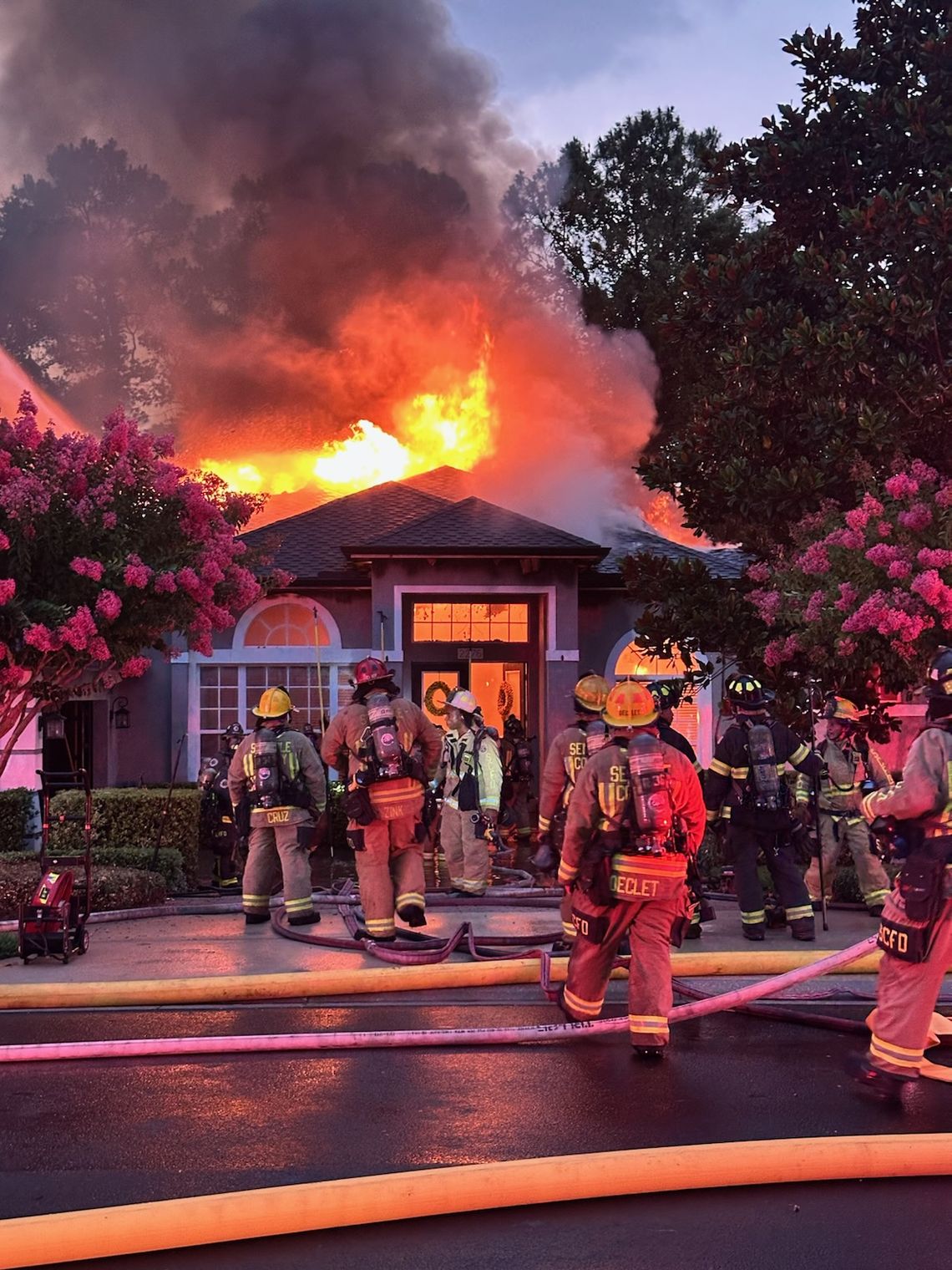
The Seminole County Fire Department recently responded to a residential fire after a wayward lightning bolt struck a home located on Northumbria Dr. in Sanford.
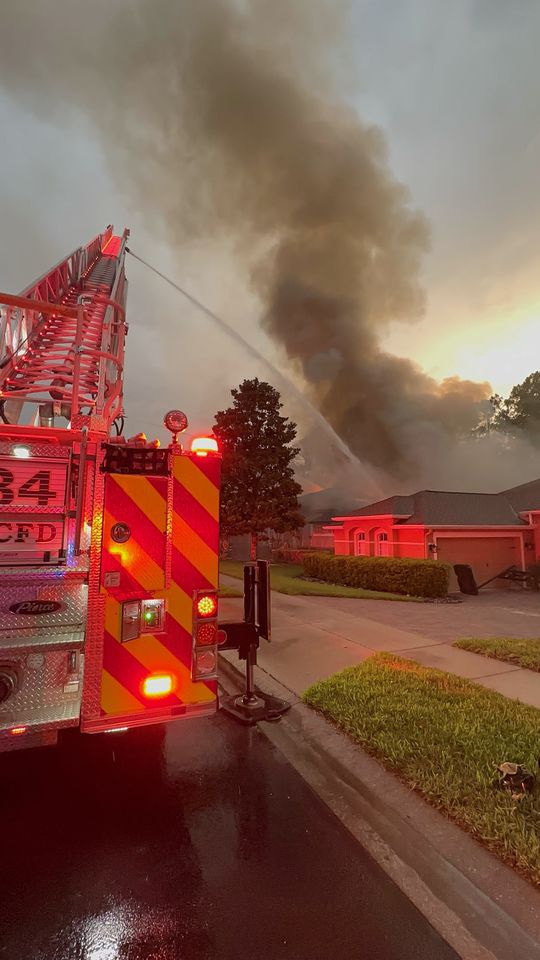
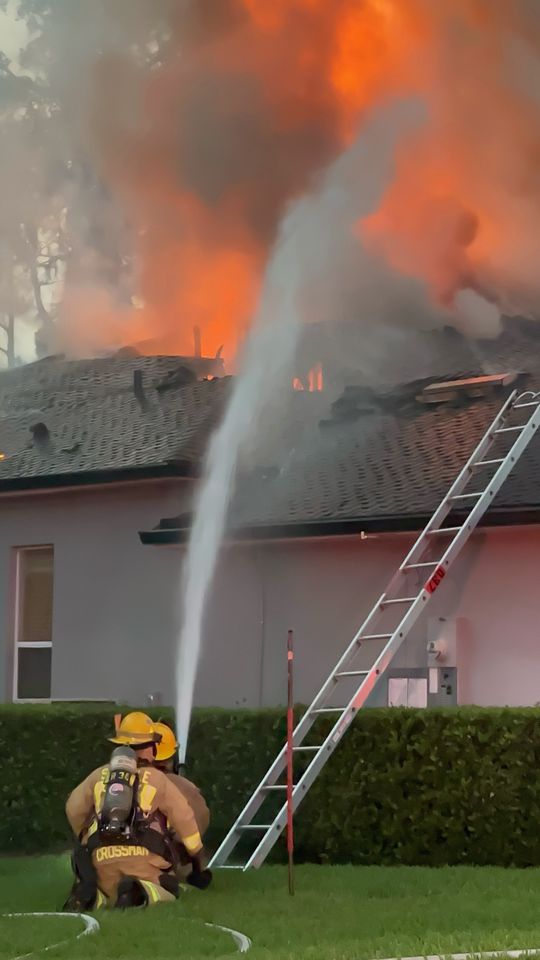
On scene, firefighters from the SCFD, Longwood Fire Department, Oviedo Fire Department, and the Sanford Fire Department found smoke pouring from the roof and attic of the one-story home. The house’s residents - an unnamed couple and their dogs - were able to escape without injury, but the same cannot be said for their home.
Lieutenant Dave Williams, a paramedic and member of Seminole County Fire Department’s Public Information Office who was on scene for the fire, reports that the house “suffered catastrophic damage” and is “more than likely a complete loss.” While the Fire Marshall is reportedly still investigating, firefighters have attributed the cause of the fire to a lightning strike that hit the house’s roof during the severe thunderstorms that swept over Sanford on May 27. The lightning strike then ignited the attic, which allowed the flames to spread to the rest of the house.
The fact that the fire started in the attic made it a challenge, according to Lt. Williams. “Attic fires are challenging to extinguish because attics are large, enclosed spaces that often contain dry, unprotected structural wood components,” he said. “These conditions can accelerate fire growth and make it harder to control, requiring significant effort and resources from firefighters to bring the blaze under control.”
While the concept of a lightning strike sparking a fire might seem like a freak accident, lightning-related fires are more common in Florida than in most other states, given our frequent thunderstorms and high lightning density. In 2024, the Seminole County Fire Department responded to 24 lightning-related calls, and in 2025 they’ve already responded to 7.
Officials have confirmed that while there are features than can make certain structures more vulnerable to lightning strikes - tall structures, on hills or in open areas, structures near tall trees, and structures with metal components like roofing and gutters - there was nothing particularly noteworthy about the house on Northumbria Dr. that caused it to “attract” a lightning strike in any way.
Along with starting fires, a lightning strike can cause severe electrical damage to your home’s wiring. In order to protect your home from lightning strikes and the power surges they cause, the Seminole County Fire Department recommends installing a whole-home surge protection system, installed in your home’s main electrical panel by your local power company or a licensed electrician. In addition, they also recommend using “point-of-use” surge protection devices, like the power-surge strips that plug directly into an outlet. Point-of-use devices block residual surges from affecting devices like your TV, computer, and other plugged-in devices.
“If you suspect that your home has been struck by lightning, act quickly and safely even if you don’t immediately see damage,” says Lt. Williams. “Don’t hesitate to call 911. A lightning strike can cause hidden fires, especially in walls, the attic, or electrical systems. These may smolder before becoming visible. Firefighters have the tools and training to check for hot spots and other immediate hazards that you can’t detect on your own. Once we have assessed your home for damage or fires, it’s also important to follow-up with a licensed electrician so they can test your home’s wiring and electrical systems.”
For more information on fire prevention, visit the Seminole County Fire Department’s Community Outreach website at https://www.seminolecountyfl.gov/departments-services/fire-department/community-outreach/.