By Joshua-Paul Estabalaya
Herald Intern
When annual assessments arrive in the mail this November, Tuscawilla residents can expect to pay a higher fee for their neighborhood’s infrastructural maintenance.
On Sept. 9, Winter Springs commissioners voted 3-2 to raise the annual assessment for the Tuscawilla Lighting and Beautification District (TLBD). Each year, commissioners must specify and approve the assessment for it to be levied, and this year, concerns about insufficient TLBD funds led them to narrowly pass a resolution increasing the fee from $128 to $160.
“Over the years, maintenance costs have increased beyond the maximum allowable rates, and the fund balance is depleting,” a Winter Springs report prepared by the consulting firm NBS stated. “Therefore, the City desires to increase the assessment to appropriately fund the ongoing maintenance and administrative costs.”
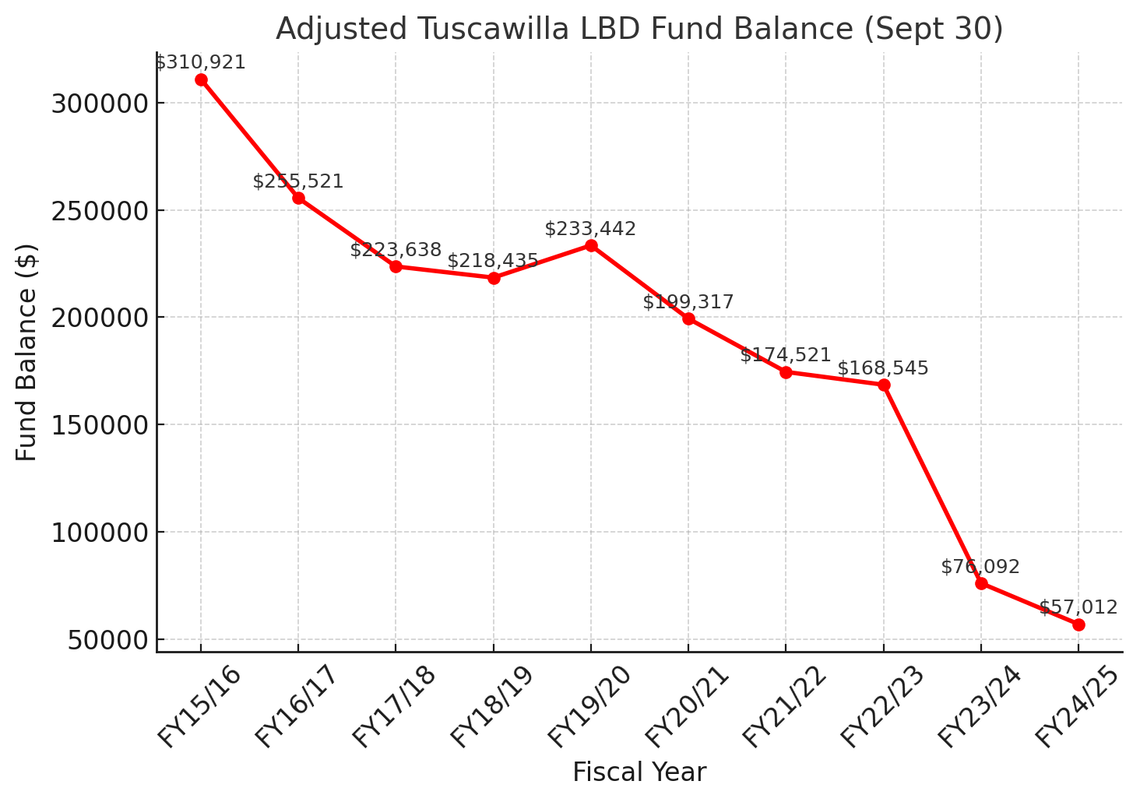
According to information provided by Winter Springs Mayor Kevin McCann, the TLBD’s funds have been declining, from more than $310,000 in fiscal year 2015-2016 to $57,012 in fiscal year 2024-2025.
Winter Springs Communications Director Matthew Reeser said that after assessments come in the mail in November, they’re due by March of the following year.
Reeser added that residential properties may face higher or lower fees depending on what type of household they are. A typical single-family home will likely have to pay $160 for the assessment, but other properties, such as multifamily abodes, may pay different amounts.
Much of the TLBD lies within Winter Springs Commission District 3, which is represented by Commissioner Sarah Baker, who voted to increase the assessment. Baker did not respond to email questions.
Part of the TLBD also lies within District 2, which is represented by Commissioner Victoria Bruce, who also voted to raise the TLBD assessment. She told The Sanford Herald by email that the fee increase will improve Tuscawilla’s landscaping, lighting and beauty maintenance and benefit “areas that have been neglected due to budget limitations.”
“While I recognize the financial burden that any increase poses, the fact remains: the current fee structure has not kept pace with inflation or the cost of basic maintenance needs,” Bruce said. “Tuscawilla is one of the most well-established and beautiful communities in Winter Springs, and residents deserve lighting, landscaping, and beautification services that reflect that.”
Commissioner Paul Diaz, who represents District 1, voted against raising the assessment fee. He stated, “it’s yet another example of the city raising costs on residents — on top of recent hikes in trash, water, property taxes, and now this so-called ‘special’ district fee. There is nothing special about the government taking more money from people by force.”
In October 2023, Winter Springs commissioners voted to raise solid waste disposal fees by 26% in both 2024 and 2025.
Commissioner Mark Caruso, who represents District 5, also voted against the assessment hike, said, “This is a bad time to have increases with the County increase and our Storm Water increase. I feel we need to get the money managed better than [in] the past and we don't really know what the landscape will actually cost.”
In May, Winter Springs commissioners voted to increase Winter Springs’ stormwater fee from $5.50 to $10 per month, a hike that Reeser in his email said aims to “provide additional funding to address ongoing stormwater maintenance and infrastructure issues.”
In addition to increasing the TLBD assessment for this year, commissioners also voted 3-2 to raise the cap on the assessment fee from $128 to $220. Caruso and Diaz similarly voted against this measure.
Originally, a recommendation based on NBS’s report suggested raising the assessment cap to $255.20, nearly a 100% hike, but Bruce refused to vote for a maximum fee that high. During the Sept. 9 commission meeting, she suggested a $220 cap instead, which ultimately won her vote along with those of two other commissioners to gain a majority to pass.
Reeser said in his email that assessment caps prevent a property’s assessed value from “rising too quickly year over year. This helps to protect homeowners from dramatic tax increases, particularly in areas where property values are rapidly appreciating.”
Next year, commissioners will have to pass a resolution again stating how much the TLBD assessment will be.
On her blog, Bruce wrote that she won’t back future assessment increases unless there’s “clear accountability.” In an email, she elaborated that this meant “A full audit trail of how TLBD funds are spent. Public scorecards tracking project completion, budget adherence, and service quality. Independent or internal quality assurance measures that aren’t vague or hidden. Resident reporting tools and feedback mechanisms to flag missed services.”