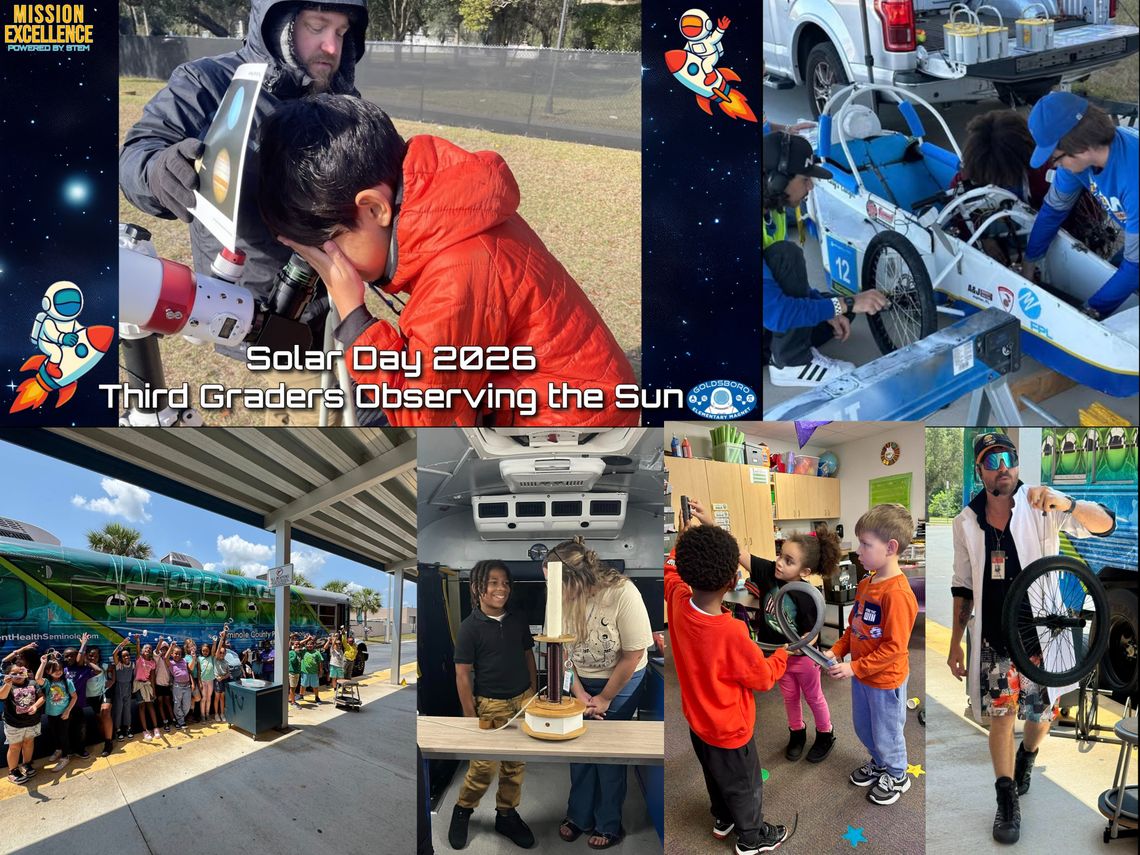
Contributed by SCPS
Seminole County Public Schools is proud to announce
that it has once again earned the distinction of being the top school district in
the State of Florida for preparing high school students for college STEM
(Science, Technology, Engineering, and Mathematics) majors for the 2025–26
school year.
According to the most recent STEM Prep Index released on February 4, 2026,
Seminole County leads all 67 Florida school districts in student participation in
key college-preparatory STEM courses, including chemistry, physics,
precalculus, and calculus, based on Fall 2025 enrollment data from the Florida
Department of Education. Seminole County has held the top spot on this
statewide index every year since it was first compiled, making it a consistent
hallmark of the district’s commitment to STEM excellence and student
opportunity, and reinforcing its’ nickname of STEMinole County.
The STEM Prep Index is calculated by adding a district’s enrollment rates in the
four subjects most strongly correlated with success in STEM majors after high
school, physics, chemistry, precalculus and calculus, offering a clear measure of
how well schools prepare students for rigorous STEM coursework in college
and future STEM careers. Seminole County’s sustained strength across these
measures reflects a robust STEM education pipeline from middle school
through high school graduation.
“Seminole County Public Schools has long set a standard for academic
preparation in STEM fields, and maintaining our #1 ranking again this year is a
testament to the dedication of our students, families, teachers, and
administrators,” said Serita Beamon, Superintendent of Seminole County Public
Schools. “Our focus on rigorous instruction, enhanced course offerings, and
meaningful real-world learning experiences ensures that students are ready for
competitive college STEM programs and the high-demand careers of
tomorrow.”
Seminole County’s success in STEM preparation builds on district strategic
investments, including expanded access to accelerated courses, recruitment
into upper-level math and science courses, teacher professional development
initiatives, and partnerships with local industries and higher education institutions.