
By Taylor Coffman
Herald Correspondent
Lithium-ion batteries are everywhere; most people have at least half a dozen in their houses on any given day. Despite being found in most electronic devices, from cell phones to vape pens to electric cars, the batteries themselves are often only a passing thought for most of the general public - and a potential ignition source. The past few years have seen a meteoric rise in battery-related house fires across the U.S., and Central Florida in particular has been no stranger to devastating fires and property loss.
Lithium-ion batteries typically start fires when the flammable electrolytes inside the batteries spark, which can be caused by overheating, over or undercharging, improper battery use, using the wrong charging accessories, or physical damage, among other causes. The Seminole County Fire Department reports that they responded to around 20 battery-related fires in 2025 - around two a month - with a good portion of those being caused by devices like phones, tablets, and computers. The SCFD’s Lt. Paul Hammerl reports that lithium-ion battery fires “burn hotter, faster, and more persistently than ordinary fires” and that a “damaged or improperly charged battery can ignite and even reignite hours later.”
One of the biggest causes of lithium-ion battery related fires is improper disposal. Batteries that are thrown away instead of recycled are then compacted with the rest of the trash, which often leads to fires breaking out inside of garbage trucks. Romeo Vellutini, Waste Pro’s VP of Safety and Risk, has reported that the company sees an average of one to two lithium-ion battery fires a week, and that the threat of improper battery disposal is a topic of discussion for waste removal companies across the country.
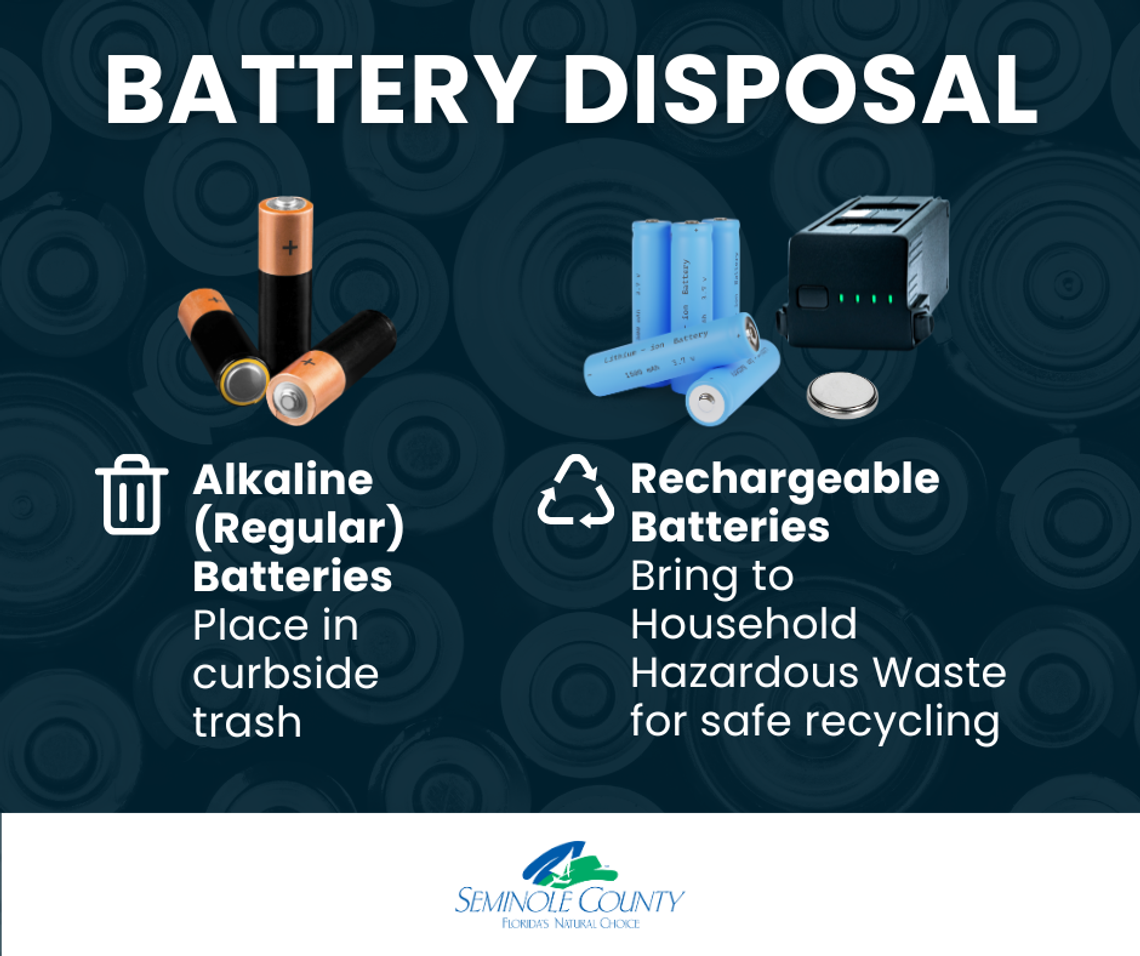
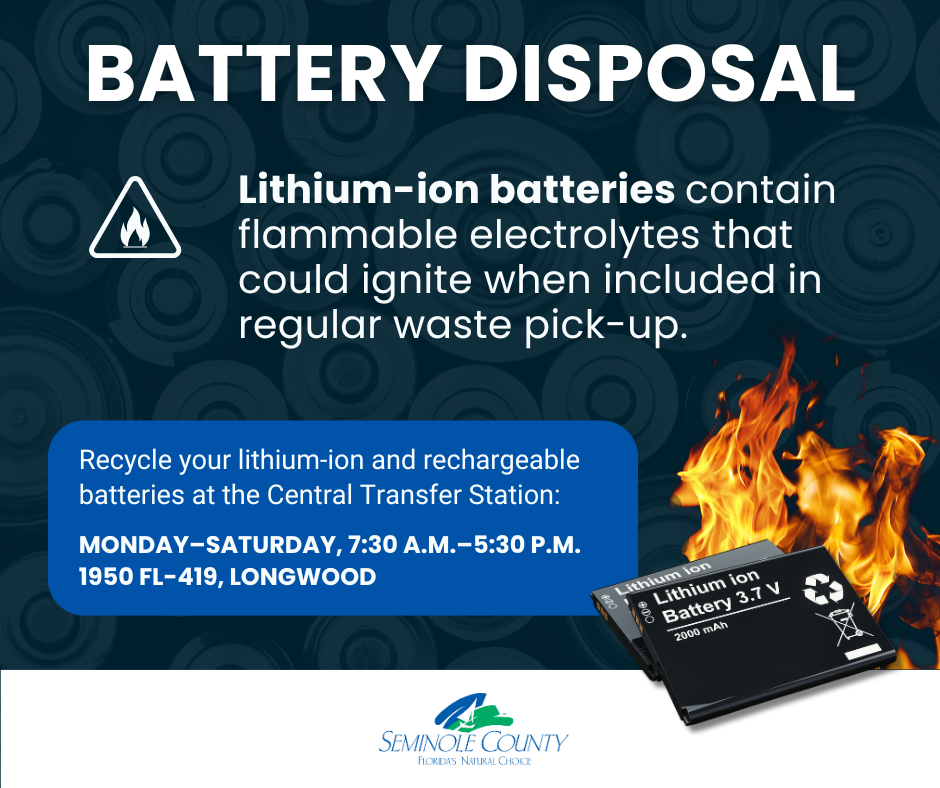
To prevent battery-related trash fires, the fire department recommends that all lithium-ion and other rechargeable batteries be dropped off at Seminole County’s Central Transfer Station, located at 1950 State Road 419 in Longwood.
In order to combat the rise in lithium-ion battery related fires, the Seminole County Fire Department has advised residents to take CHARGE of Battery Safety by:
• Choosing certified products - Only use batteries from reputable brands, and avoid knockoff batteries and accessories that may cause sparking due to improper charging.
• Handle with care - Always charge your batteries in well-ventilated areas, and avoid overcharging them. Avoid dropping or otherwise harming lithium-ion batteries; if you drop a battery, the fire department recommends leaving it alone in the immediate aftermath and moving it outdoors to keep an eye on any fire-related warning signs.
•Always stay alert for swelling, smoke or hissing - all of these are potential warning signs that the battery may be about to ignite. If you spot any of these warning signs, the fire department recommends getting away from the battery, avoiding the toxic smoke they release, and calling 911 as soon as possible.
•Recycle batteries at approved locations - remember to recycle batteries at the Central Transfer Station rather than throwing them in the trash. In addition, be mindful of a battery’s lifespan, and be sure to recycle them on time.
•Get out quickly if there’s a fire - as with any other house fire, make sure to get yourself and any family members and pets to safety in a calm, orderly fashion. The fire department advises that e-bikes and mobility devices should not be charged near doorways, as this could block an exit if that device were to catch fire.
•Educate others on safe practices - more information on lithium-ion battery safety can be found by contacting the Seminole County Fire Department at 407-665-5175, or by visiting the U.S. Fire Administration (USFA) website at https://www.usfa.fema.gov/prevention/home-fires/ for more resources.