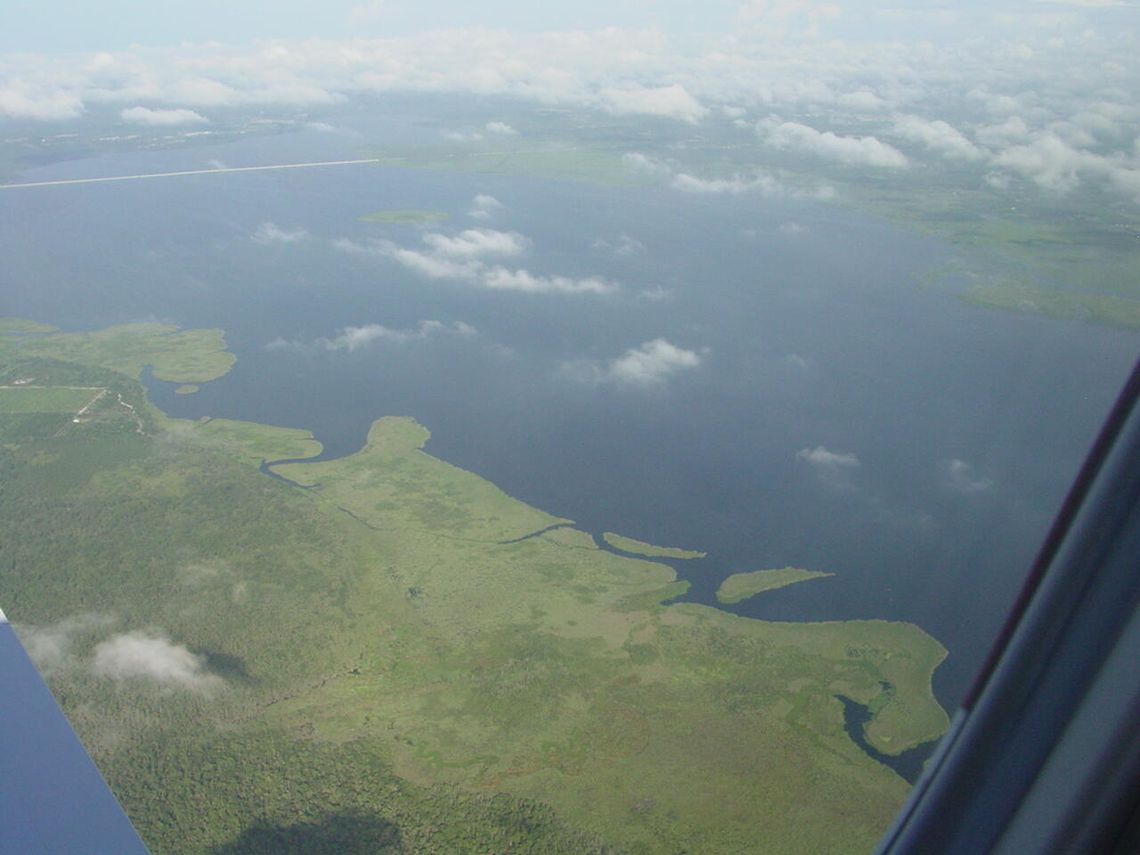
The Florida Department of Health has recently issued a health alert for the presence of harmful blue-green algae toxins in Lake Jesup, Seminole County.
A water sample taken on August 15, 2024, alerted officials to the presence of microcystin toxins, produced by the cyanobacteria that make up blue-green algae according to FDOH spokesperson Mirna Chamorro. Officials are now urging residents near Lake Jesup to take precautions.
FDOH recommends not coming into contact with algal blooms in Lake Jesup, whether swimming, drinking or boating. If you come into contact, the advisory recommends washing your clothes and skin with soapy water. Pets and livestock should be kept away from the entire water body when algal blooms are present.
Chamorro emphasized that sensitive individuals, such as the elderly, children and immunocompromised individuals, should avoid any exposure to Lake Jesup water.
The advisory also recommends not cooking or cleaning with contaminated water, since boiling does not remove microcystin toxins. While FDOH advises against eating shellfish caught in Lake Jesup, healthy fish caught in the lake can still be consumed safely if washed and cooked thoroughly.
Potential side effects from blue-green algae exposure include rashes, stomach cramps, nausea, diarrhea and vomiting, according to Chamorro.
Dr. David Jenkins of the d4 Ecology Lab in the University of Central Florida explains that “summer waters are more likely to have algal blooms,” so the presence of blue-green algae is “more common in Florida than cooler places.”
“Some cyanobacteria excrete chemicals into the water that can make it taste bad…, while others excrete chemicals that are actually toxic if ingested in large enough doses,” he said.
Dr. Jenkins touched on how toxins within Lake Jesup water may survive boiling, saying that “boiling kills living cells… but boiling does not break down many chemicals dissolved in water.”
He also added that there was no reason to believe drinking water would be affected by this advisory.
“All this is very unlikely in city tap water, which comes from deep wells,” he explained.
For more information on the advisory, FDOH recommends visiting protectingfloridatogether.gov, where residents can view the current status of all algal bloom advisories and sign up for notifications when a status is updated.